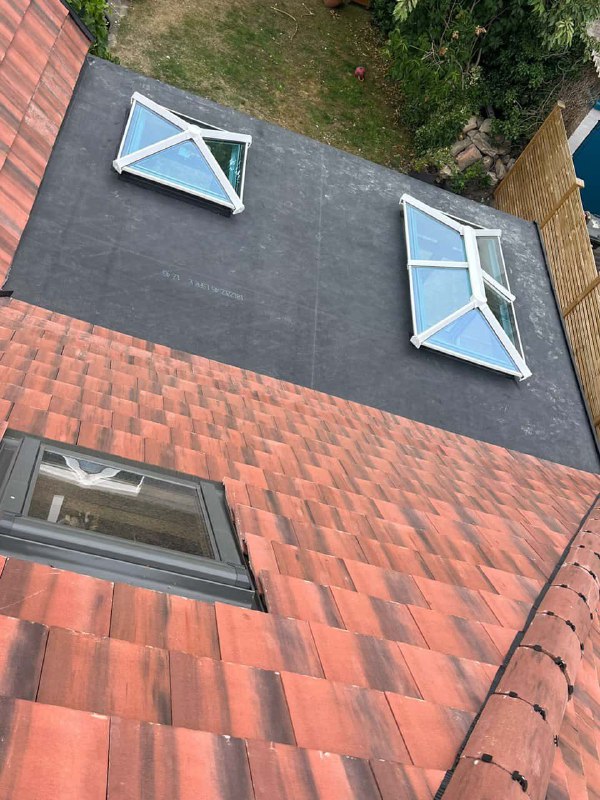
How Can Temporary Roof Damage Quickly Become a Permanent Problem?
Roof damage does not always begin with a major failure. A slipped tile after strong winds, a small opening around flashing or a minor leak during heavy rainfall can initially appear temporary and relatively contained. The difficulty is that once the roof’s protective layers have been compromised, continued exposure to the weather can allow a small defect to affect surrounding materials.
For homeowners in Wellingborough, Northamptonshire, dealing with roofing damage early can help prevent a straightforward repair from developing into a much larger problem. At TVB Roofing Wellingborough, we assess the source and extent of roof damage carefully, ensuring that repairs address the underlying defect as well as any surrounding areas that may have been affected.
What Is Meant by Temporary Roof Damage?
Temporary roof damage is often a defect caused by a particular event or isolated failure rather than widespread deterioration of the entire roofing system.
Examples can include:
- A tile displaced during strong winds
- A cracked or broken roof tile
- A small flashing defect
- Localised storm damage
- A damaged ridge or hip section
- A minor leak around a roof junction
- Localised damage to a flat roof covering
When these problems are identified promptly, the required work can often remain concentrated around the affected area.
The risk comes when the defect is left exposed and begins influencing other roofing components.
A Small Opening Can Allow Repeated Water Ingress
A roof is designed to prevent rainwater from reaching the materials beneath its outer covering. Once a tile moves or another opening develops, that protection may be reduced.
One period of rainfall might cause little noticeable damage. Repeated exposure is different.
Water may gradually reach the underlay, battens or other materials beneath the covering. What started as one displaced tile can therefore become a moisture problem affecting a much larger section.
This is one of the main reasons early roof repairs are so valuable.
Minor Leaks Can Be More Significant Than They Appear
A small ceiling stain may not seem particularly serious, but the amount of visible water does not necessarily show the full extent of the problem.
Rainwater can travel through a roofing system before becoming noticeable inside the property. It may follow:
- Roofing underlay
- Rafters
- Battens
- Insulation
- Internal surfaces
By the time a damp patch becomes visible, moisture may already have travelled beyond the original point of entry.
Professional leak detection is therefore important even when the internal signs appear relatively minor.
Missing and Slipped Tiles Can Affect Surrounding Areas
One missing tile does not necessarily mean that a roof has suffered widespread damage. However, the surrounding area should still be checked.
If a tile has been displaced by wind, neighbouring tiles may also have moved without becoming completely detached. An exposed section can also allow wind-driven rain to reach areas that would normally remain protected.
Prompt inspection can establish whether the problem involves only one tile or whether additional repairs are needed nearby.
Damaged Underlay Can Turn a Simple Repair into a Larger Job
Roofing underlay provides secondary protection beneath tiles or slates. It is not intended to replace the external covering permanently.
When an opening in the roof remains exposed, underlay can experience repeated moisture and weather exposure.
If it becomes damaged, brittle or torn, simply replacing the missing external tile may no longer address the entire problem.
This demonstrates how a relatively straightforward surface defect can gradually become a more involved roofing repair.
Roofing Battens Can Also Be Affected
Battens support the roof covering and form an important part of many pitched roofing systems.
Persistent moisture beneath the tiles can affect these underlying components. If deterioration develops, the affected area may require more than replacing the original damaged roofing material.
Early attention helps protect the supporting components while the defect is still localised.
Flashing Problems Can Gradually Worsen
Flashing protects vulnerable areas where different roof surfaces and structures meet.
A small split, lifted section or deteriorated junction may initially allow only limited water ingress. However, repeated rainfall can continue exploiting the same weakness.
Flashing problems commonly require attention around areas such as:
- Chimneys
- Roof-to-wall junctions
- Changes in roof level
- Other vulnerable roof details
Repairing the flashing properly can prevent moisture from continuing to affect surrounding materials.
Storm Damage Can Be More Extensive Than It Looks
After poor weather, homeowners may notice one obvious problem and assume that it represents the complete extent of the damage.
For example, a missing tile may be clearly visible from ground level while nearby materials have also loosened.
Following significant weather exposure, a professional inspection can consider:
Roof coverings
Tiles or slates may have cracked, lifted or shifted.
Ridge and hip areas
Exposed sections may have experienced movement.
Flashing
Existing weaknesses may have been worsened.
Roof edges
Perimeter materials can be particularly vulnerable to wind.
Checking the surrounding roof helps prevent hidden storm damage from becoming a future problem.
Temporary Repairs Should Not Become Permanent Solutions
In some circumstances, an immediate temporary measure may be useful for limiting water ingress until a proper repair can be completed.
However, temporary protection should not be mistaken for a permanent roofing repair.
A lasting solution needs to establish:
- What roofing component failed.
- Why the damage occurred.
- Whether surrounding materials were affected.
- What work is required to restore the roof correctly.
Leaving a temporary measure in place without addressing the underlying defect can allow deterioration to continue unnoticed.
Flat Roof Damage Can Spread Beneath the Surface
Flat roofing problems can be particularly deceptive because water does not always remain close to the visible defect.
A small split, damaged joint or lifted section may allow moisture beneath the covering. Once this happens, water can potentially spread into a broader area.
Warning signs can include:
- Cracks or splits
- Lifted edges
- Damaged joints
- Blistering
- Internal dampness
- Persistent standing water
The earlier the defect is assessed, the better the opportunity to determine whether a localised repair remains suitable.
Roof Valleys Can Turn Small Defects into Significant Leaks
Valleys are designed to carry concentrated volumes of rainwater between roof slopes.
Because so much water passes through these areas, even relatively small defects can become important.
Debris, displaced surrounding tiles or deterioration within the valley can interfere with effective drainage and increase the opportunity for water ingress.
A problem around a valley should therefore be assessed before repeated rainfall allows further deterioration.
Moisture Can Affect the Roof Space
Once rainwater passes beyond the external covering, the problem is no longer limited to the visible roof surface.
Continued moisture exposure can potentially affect:
- Roof timbers
- Insulation
- Internal ceilings
- Surrounding finishes
This is why waiting until a leak becomes severe is rarely the best approach. The objective should be to restore the external weather protection before moisture has the opportunity to spread further.
Repeated Wetting Can Make Damage Harder to Isolate
One advantage of early roofing repairs is that the source and extent of the problem may still be relatively easy to define.
As water repeatedly enters, several surrounding materials can become damp. This can make the eventual problem more extensive and sometimes more difficult to diagnose.
A defect that originally required attention in one small section may eventually involve several components of the roofing system.
Minor Damage Can Expose Existing Weaknesses
Sometimes temporary damage does not create every subsequent problem by itself. Instead, it exposes weaknesses that were already developing.
For example, wind may remove one tile from a roof where surrounding fixings are also deteriorating. Heavy rain may expose a flashing junction that was already beginning to fail.
A professional inspection can therefore reveal whether the incident is genuinely isolated or has highlighted a wider maintenance requirement.
When Does a Localised Repair Remain Appropriate?
Many roofing defects can still be resolved through targeted repairs when they are dealt with promptly.
Localised repair may be appropriate where:
- Damage is confined to one section
- Surrounding tiles or slates remain sound
- Underlying materials are serviceable
- The source of the problem is identifiable
- Water ingress has not caused extensive deterioration
There is no reason to carry out unnecessary wider roofing work when the existing system remains fundamentally sound.
When Can the Problem Require More Extensive Work?
More substantial repairs may become necessary if the original damage has been left long enough to affect surrounding roofing components.
Signs of broader deterioration can include:
- Recurring leaks
- Several damaged roof areas
- Deteriorated underlay
- Problems affecting battens
- Multiple loose tiles
- Widespread moisture ingress
- Continuing problems around roof junctions
The appropriate solution should always be based on the actual extent of the damage.
Why Early Professional Assessment Is Valuable
Homeowners can often identify that something has changed, but determining exactly what has happened to a roof can be difficult from ground level.
Professional roofers can inspect the affected area and assess how different components are performing together.
An inspection can determine:
- Where the damage originated
- Whether the roof remains weather-resistant
- How far the defect extends
- Whether underlying materials are affected
- Whether surrounding areas remain secure
- What level of repair is appropriate
This allows work to be targeted accurately before deterioration spreads unnecessarily.
Why Choose TVB Roofing Wellingborough?
At TVB Roofing Wellingborough, we provide professional roof repairs, inspections and new roofing services throughout Wellingborough, Northamptonshire.
Our approach is to look beyond the most obvious symptom and establish the full extent of the roofing problem. Whether the damage involves slipped tiles, leaks, flashing, storm damage, flat roofing or other vulnerable roof details, we focus on carrying out appropriate repairs that restore dependable weather protection.
Early professional attention can help preserve sound roofing materials and prevent a manageable defect from becoming a much larger issue.
Conclusion
Temporary roof damage can become a permanent problem when the original defect leaves surrounding materials exposed to repeated rain, wind and moisture. A missing tile, small flashing defect or minor leak may initially be localised, but continued exposure can eventually affect underlay, battens, roof timbers and internal areas.
The key is to deal with the cause while the damage remains contained rather than waiting for more obvious symptoms to develop.
If you have noticed recent roof damage at your property in Wellingborough, Northamptonshire, contact TVB Roofing Wellingborough. We can assess the affected area, identify any associated deterioration and carry out the appropriate repairs to restore reliable protection to your roof.
Call us on: 01933 823 227
Click here to find out more about TVB Roofing Wellingborough
Click here to complete our contact form and see how we can help with your roofing needs.